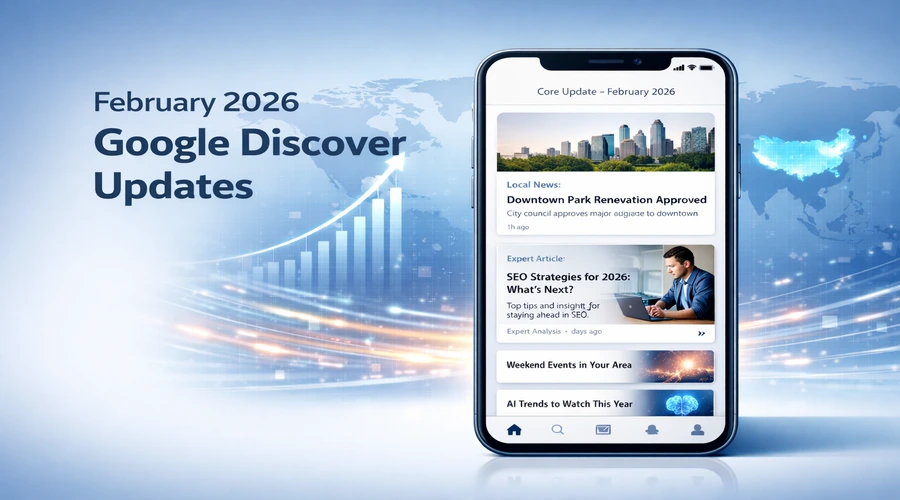
Google Discover Core Update February 2026 Updates and Impact
Google Discover now serves as the primary source of organic traffic for publishers and digital marketers who publish online content. Discover functions differently from traditional search because it displays content to users based on their personal interests and their current location and their user behaviour without requiring them to enter a search term. A single advertising spot can generate more than 10000 website visits within a single night.
You need to focus on the announcement from Google Search Central which they made on February 5 2026.
What Is the Google Discover Core Update for February 2026?
Google made its first official announcement about the February 2026 Discover core update on February 5 2026 because the update holds important historical value. Google Discover received its first core update which Google developed to operate independently of its standard Search ranking system.
The Google service started its initial English-language rollout on February 5. The service will extend to new countries and languages within the next few months.
How Google Discover Works (And Why It's Different)
Google Discover serves as a customized content delivery system which operates on mobile devices and through the Google application. The system recommends content to users who have not performed any searches because it analyses their interests and their past engagement activities and their current location.
The Discover system uses different systems to determine how Google users see a webpage compared to how Google Search systems determine its visibility. The systems which operated before this point now received their first core update treatment as dedicated systems. Publishers must understand that Discover traffic shows significant movement patterns because it operates independently from Search ranking systems which remain fixed.
What are the Updates?
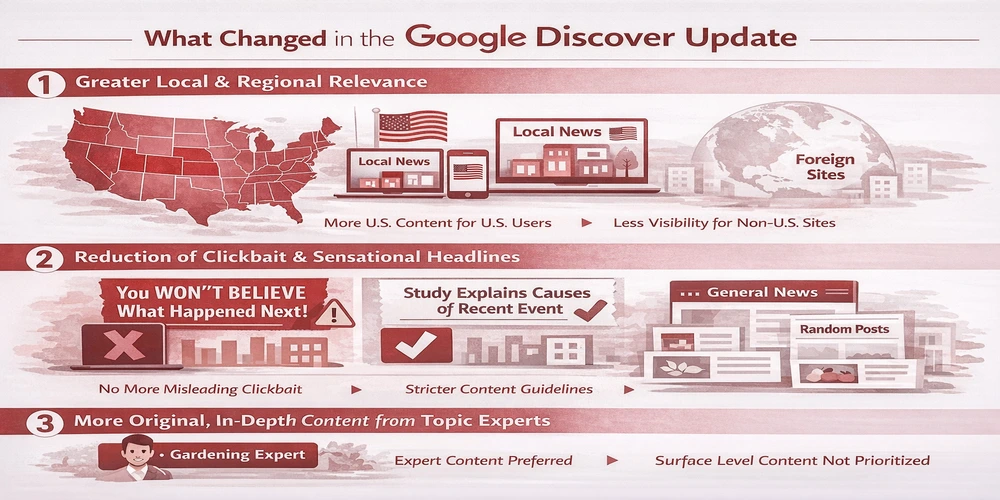
The Discover update from Google provides three main benefits according to their official announcement:
- Greater Local and Regional Relevance Google will now prioritize content from websites based in a user’s own country. U.S. users will receive more content from U.S. publishers because this feature enhances their experience. The update will reduce visibility for non-U.S. websites that used to show up in American Discover feeds.
- Reduction of Clickbait and Sensational Headlines The update targets deceptive headlines which present false information and use emotional manipulation to increase link clicks instead of providing actual content value. The company has decided to implement stricter rules against activities which Google has identified as prohibited through its guidelines.
- More Original, In-Depth Content from Topic Experts Google’s systems will prefer content from publishers who show actual expertise in specific subjects which evaluators will assess through individual topics and not through entire websites. The local news website which contains an extensive gardening section has established itself as a gardening authority. The general website which publishes gardening content on occasion will not qualify as a gardening authority.
Who Is Affected?
The media sector together with blog sites that depend on Discover traffic will experience the strongest effects while lifestyle and entertainment platforms and international publishers who used to reach American citizens together with all websites that employ clickbait titles will experience the same effect.
A decline in Discover impressions does not function as a penalty because updated systems now assess content based on its relevance,quality and expertise. The majority of websites will experience no changes.
The Google guidance matches its core update advisory which states that users should create content which effectively meets their audience needs. The official Google statement provides the following information:
- Your headlines must accurately describe your content through exact words which create no false urgency.
- You should create original comprehensive content about subjects where your website has established expertise.
- You should restrict your work to your main academic fields because your current work does not connect with any popular subjects.
- The updated Google Discover documentation requires web pages to deliver excellent user experience because it now counts page experience as a ranking element which includes both disruptive advertisements and website performance speed.
- You can track your website performance by using the Discover report which Google Search Console provides to monitor your impression and click data and observe your performance development.
The February 2026 Discover core update confirms that Google treats Discover as a separate product which has its own standards of quality and its own core updates.
The publishers who will benefit the most from the changes will be the organizations that already complete the necessary work. Local news organizations covering their communities and niche websites with genuine expertise and creators who focus on creating quality content will gain the most benefits. Google found through its research that users discovered greater value in Discover after the update.
The path forward appears evident. The production of authentic high-quality expert content establishes strong competitive benefits for organizations which want to succeed in Discover.